fa
  • FA fa
  • EN en
  • AR ar
  • RU ru
fa
  • FA fa
  • EN en
  • AR ar
  • RU ru

Steel structure

Steel Structures Mammut Structures & panel

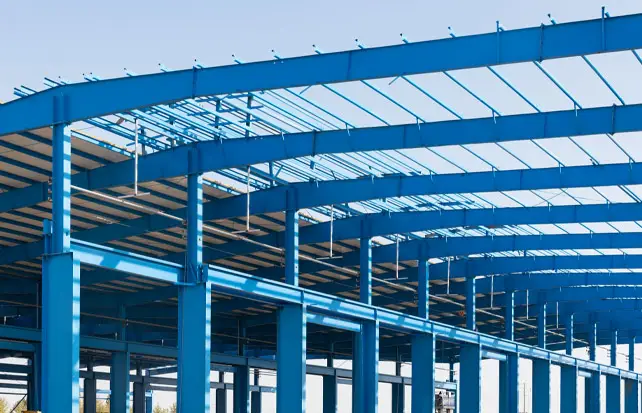
Steel warehouses are large-span metal structures that are constructed with pitched or arched roofs for various industrial applications. Today, warehouses can be built using construction materials such as metal and concrete, and are used for different purposes such as storage, manufacturing, maintenance, and more.

It can be said that the first industrial metal structures were built in the 18th century, which were usually made of wood and used for simple purposes such as warehousing. With the advancement of industry and the growing need of manufacturers for more space to produce and store products, these industrial warehouses also evolved. With the beginning of the Industrial Revolution in the 19th century, the need for industrial space among craftsmen increased. During this period, steel industrial warehouses—also known as building frames or structural steel buildings—were constructed. These metal industrial structures had greater strength and durability compared to wooden warehouses and could withstand heavier loads.

What is steel structure?

Steel warehouses are large-span metal structures that are constructed with pitched or arched roofs for various industrial applications. Today, warehouses can be built using construction materials such as metal and concrete and are used for different purposes such as storage, manufacturing, maintenance, and more.

It can be said that the first industrial metal structures were built in the 18th century, which were usually made of wood and used for simple purposes such as warehousing. With the advancement of industry and the growing need of manufacturers for more space to produce and store products, these industrial warehouses also evolved. With the beginning of the Industrial Revolution in the 19th century, the need for industrial space among craftsmen increased. During this period, steel industrial warehouses—also known as building frames or structural steel buildings—were constructed. These metal industrial structures had greater strength and durability compared to wooden warehouses and could bear heavier loads.

Design of Steel Structures Mammut Structures

Proper design of Steel Structures is the first and most critical step in any successful project. This stage ensures the safety, efficiency, and cost-effectiveness of the project. The engineering team of Steel Structures Mammut Structures, leveraging up-to-date knowledge, standards (such as AISC and national building regulations), and advanced software (such as Sap2000, Etabs, and Tekla), provides optimized, precise, and efficient designs for you.

Design of Steel Structures Mammut Structures

The design process includes the following key stages:

  • Needs analysis and usage type: A thorough review of the type of structure (warehouse, industrial building, bridge, multi-story building, sports hall, etc.) and the project’s environmental conditions, including soil strength and climatic conditions.
  • Accurate technical calculations and loading: Calculation of all dead loads, live loads, snow and wind loads, and especially seismic loads to ensure the structure’s safety against all possible scenarios.
  • 3D modeling and precise drafting: Designing the details of connections, structural members, and metal components for accurate manufacturing in the factory.

Optimal design not only guarantees the structural strength but also significantly reduces the final cost of Steel Structures by minimizing unnecessary steel consumption and optimizing the dimensions of the sections.

Why steel structure Mammut Structures? Advantages of a Reliable Choice

Exceptional strength and high performance under critical conditions

Steel, as the main material, has very high tensile and compressive strength. For this reason, bridges are built from steel. Steel Structures Mammut Structures are designed to withstand heavy loads, strong winds, earthquakes, and other natural forces. High earthquake resistance, due to the ductility of steel, is one of the most important advantages of Mammut Structures.

High construction speed and time savings

Unlike concrete structures, which require significant time for formwork and curing, the components of Steel Structures Mammut Structures (such as beams, columns, and trusses) are manufactured in a controlled factory environment and only transported to the project site for assembly. This rapid assembly process significantly reduces construction time, allowing you to complete your project in the shortest possible time.

Guaranteed quality and precise supervision

All products are manufactured in the Mammut Industrial Town under the close supervision of expert engineers. This industrial production process minimizes human error and ensures uniform quality across all components.

Design and usage flexibility

Steel structures allow for larger spans and column-free spaces. This feature is ideal for industrial applications (such as warehouses and factories) and commercial uses (such as sports halls and exhibition centers), giving designers greater freedom.

Recyclability and environmental sustainability

Steel is a sustainable and 100% recyclable material. Using Steel Structures Mammut Structures helps protect the environment and is compatible with green building principles.

Price of Steel Structures in 2025

One of the main concerns in any construction project is the price of Steel Structures. In 1404, the price of Steel Structures is influenced by market fluctuations and various factors. Below are some of the most important factors affecting the cost of Steel Structures:

Price of Steel Structures
  • Current Steel Prices and Global Market Fluctuations: Steel, as the main raw material, is directly affected by domestic and international price fluctuations, which in turn impact the final cost of the structure.
  • Dimensions, span, and height of the structure: Structures with larger spans or greater heights typically require heavier profiles, which affects the final price.
  • Usage type and loading: Structures designed to bear heavier loads (such as industrial warehouses with cranes) require more complex designs and more steel.
  • Design details and type of connections: Use of bolted connections (usually more expensive but faster and higher quality) or welded connections. Bolted connections significantly speed up on-site installation.
  • Protective coatings: Type of painting (e.g., epoxy or fire-resistant paint) or galvanization (if high corrosion resistance is needed).

For accurate information on the latest prices of various Steel Structures, you can contact the experts at Steel Structures Mammut Structures.

Construction of steel structure: From Factory to Installation Site

After the design stage, the next step is the precise and high-quality construction of Steel Structures. Steel Structures Mammut Structures, utilizing modern machinery, automated production lines, and skilled personnel, carries out the construction process with exceptional accuracy.

The construction stages in the Mammut factory are as follows:

  • Cutting and assembly of components: Using CNC machines and automated equipment for precise cutting of sheets and profiles according to engineering drawings. This precision reduces waste and increases assembly speed.
  • Welding and quality control (QC): Accurate welding performed by skilled specialists and continuous quality inspection using non-destructive testing (NDT) methods to ensure weld strength.
  • Painting and protective coating: Application of protective coatings (such as anti-corrosion paints or hot-dip galvanization) to enhance the structure’s resistance to environmental factors, moisture, and corrosion. This stage significantly increases the structure’s lifespan.
  • Packaging and specialized transportation: Preparing components with proper packaging for safe transport to project sites across the country.

Design of steel structure Mammut Structures

Proper design of Steel Structures is the first and most critical step in any successful project. This stage ensures the safety, efficiency, and cost-effectiveness of the project. The engineering team of Steel Structures Mammut Structures, leveraging up-to-date knowledge, standards (such as AISC and national building regulations), and advanced software (such as Sap2000, Etabs, and Tekla), provides optimized, precise, and efficient designs for you.

The design process includes the following key stages:

  • Needs analysis and usage type: A thorough review of the type of structure (warehouse, industrial building, bridge, multi-story building, sports hall, etc.) and the project’s environmental conditions, including soil strength and climatic conditions.
  • Accurate technical calculations and loading: Calculation of all dead loads, live loads, snow and wind loads, and especially seismic loads to ensure the structure’s safety against all possible scenarios.
  • 3D modeling and precise drafting: Designing the details of connections, structural members, and metal components for accurate manufacturing in the factory.

Optimal design not only guarantees the structural strength but also significantly reduces the final cost of Steel Structures by minimizing unnecessary steel consumption and optimizing the dimensions of the sections.

Price of Steel Structures

Ordering steel structure Mammut Structures

The process of ordering Steel Structures from Steel Structures Mammut Structures is designed to provide customers with an easy, transparent, and precise experience. From the first contact to final delivery, the Mammut expert team is with you at every step to ensure a high-quality project tailored to your needs.

  • Initial consultation and specialized needs assessment: Upon your contact, our experts collect and analyze initial project information, usage type, and your expectations to determine the appropriate collaboration path.
  • Technical evaluation and proposal: The Mammut technical team, after carefully reviewing the information, provides the most suitable engineering solutions, preliminary design, and a detailed proforma invoice.
  • Contract signing and final design: After the final agreement, the engineering design process begins, and all technical project details are finalized and approved by you.
  • Transportation and on-site installation: After production, the components are delivered to the project site and installed by the execution team, ensuring a safe, precise, and durable structure.

You can also purchase containers, warehouses, and various other structures from Mammut on a credit basis

Our experts are available full-time to
respond to your valued inquiries
Our experts are available full-time to respond to your valued inquiries
Our experts are available around the clock to promptly respond to your inquiries.