fa
  • FA fa
  • EN en
  • AR ar
  • RU ru
fa
  • FA fa
  • EN en
  • AR ar
  • RU ru

Mammut Industrial Metal Shed

Mammut Industrial Metal Shed

Metal sheds are the first choice for industrial, manufacturing, and warehousing projects due to their fast construction, high durability, and customizability. At Mammut Structures & panel, the construction of metal sheds is carried out using international standards, Grade A materials, and engineering-based design.

Various types of metal sheds—from lightweight to heavy-duty—can be ordered for applications such as production lines, sports halls, cold storage facilities, and livestock shelters. Each project has its own specific requirements, and we provide transparent pricing for metal sheds by accurately calculating the weight, span, height, roof cladding, and installation location.

If you are planning to purchase a metal shed—which is a type of industrial shed—with high durability and fast delivery, the Mammut engineering team is ready to offer expert consultation.

Request for Consultation

If you would like to receive a free professional consultation, please fill in your information in the form below. Our experts will contact you as soon as possible to provide the specialized services you need.

Types of Mammut Metal Sheds

The selection of the appropriate type among various metal sheds depends on the project’s dimensions, usage, and regional climatic conditions. Each metal shed structure is designed based on structural loads (live, dead, snow, wind, and overhead crane) and is constructed in accordance with reputable standards such as AISC, National Building Regulations, and Standard No. 2800.


Single-Span Metal Shed

Single-span metal sheds are designed and manufactured for small to medium-sized spaces used for production, workshops, and service activities. These structures, with the ability to accommodate light overhead cranes, offer a cost-effective solution for small industries. The modular design of single-span sheds allows for quick and efficient construction and installation, while ensuring material optimization, structural strength, and economic feasibility. Load-bearing capacity and dimensional specifications can be adjusted based on operational needs, providing a strong and adaptable infrastructure for various industrial processes.


Multi-Span Metal Shed

Multi-span metal sheds are the best option for very large-scale projects such as factories, large warehouses, sports halls, or exhibition spaces. Due to the presence of internal columns, this type of shed reduces steel usage across wide spans and is more economical than building several independent single-span sheds. Internal column placement increases the structural strength and enables fully engineered space segmentation. In industrial projects, this type of metal shed is the most optimized choice in terms of both performance and final cost.


Arch-Type Metal Shed

Arch-type metal sheds, with their curved roof design, are suitable for areas with heavy snow or strong wind. They distribute the stresses from dead and live loads evenly to the foundation. In this type of metal shed, due to the elimination of internal columns and the aerodynamic shape of the roof, steel usage is reduced, and installation speed is increased. Moreover, in terms of metal shed pricing, it is considered a cost-effective option for agricultural halls, livestock facilities, repair shops, and semi-industrial sheds.


Metal Shed with Central Column

Metal sheds with a central column (multi-span) are the most economical option for covering very large spans, where the use of a central column significantly reduces steel consumption—by up to 30%. This type of shed is suitable for budget-constrained projects and lowers the overall price of the metal shed compared to column-free structures. Purchasing a metal shed with a central column is common in logistics, large storage facilities, and assembly halls, and it also allows for easy future expansion.

Main Components of Metal Shed

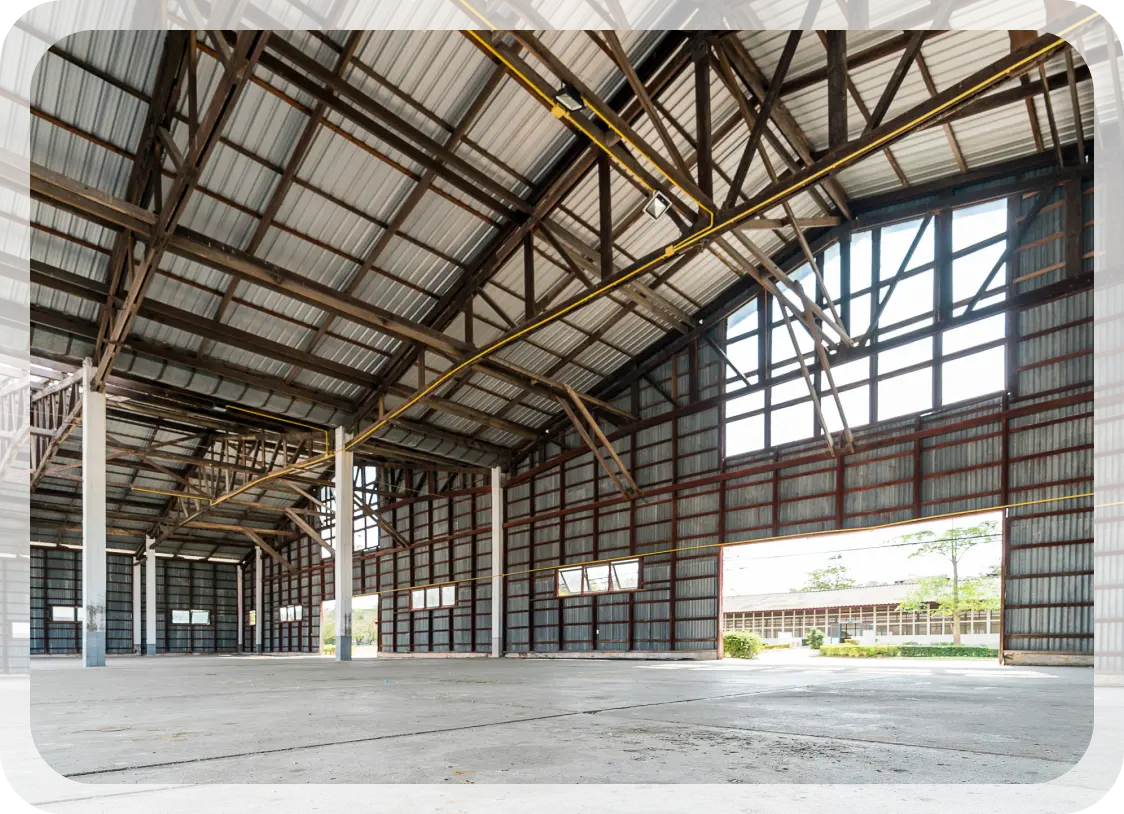
  • Columns:The most important part of any shed, columns bear the main structural load and the overall weight of the shed. They are installed after the foundation is completed and are connected to steel base plates using bolts.
  • Struts:Struts act as lateral supports and connect the main frames along the length of the shed. These connections are attached to the main beam web and column heads using flanges.
  • Rafters:These components, which form the pitched roof of the shed, are made from two separate plate girders and assembled on-site. Rafters are lifted and installed on the roof using a crane, and their number is determined based on the project’s dimensions.
  • Bracing:Bracing is used to enhance the strength and stability of the shed’s steel structure. Bracing systems include tie rods, wall posts, and other types, which prevent structural damage under various conditions.
  • Purlins:These secondary components play a critical role in supporting the shed roof and bearing the weight of the roof covering. Purlins are made of Z-shaped steel profiles and are installed between the main roof frames at specific intervals.

Secondary Components of Metal Shed

  • Base Plate:This component is used at the connection point between the columns and the foundation, helping to strengthen the base of the shed.
  • Wall Post:These secondary elements act as auxiliary columns located at the front and rear ends of the shed.
  • Gutter (Drainage Channel):Gutters are responsible for directing and discharging rainwater and snowmelt from the roof, preventing moisture-related damage to the structure.
  • Wind Bracing:Wind braces are used to enhance the overall stability and strength of the structure. They play a critical role in preventing structural deformation during strong winds.
  • Tie Beam (Anti-Buckling Brace):This component prevents the torsion (twisting) of the main beams and helps maintain the balance and stability of the shed structure.

Benefits of Consulting with Mammut Experts

Receive Specialized and Precise Solutions
Time and Cost Savings
Reducing Decision-Making Risks
Personalized Solutions Offering
Continuous Support and Partnership
Access to Professional Networks
Staying Up-to-Date with Industry Developments
Enhancing Decision-Making Quality

Mammut Metal Shed Pricing

Accurately calculating the cost of a metal shed is not possible before the design phase and the project’s specific requirements are defined. These structures are fully customized, and many variables influence the final price. The most important factors affecting the cost of a metal shed include:

  • Span, length, and height of the shed
  • Type of steel sections (heavy-duty or lightweight structure)
  • Type of roof and wall cladding (sandwich panels, galvanized sheets, etc.)
  • Presence of overhead cranes or special load-bearing requirements
  • Type of connections (bolted or welded)
  • Geographical location of the installation site
  • Transportation, installation, and foundation construction costs
  • Production capacity and project delivery timeline

Due to fluctuations in steel prices and the uniqueness of each project, we strongly recommend contacting Mammut Structures & panel experts before purchasing a metal shed. After receiving the initial information, execution drawings, installation site, and technical needs, we will provide an accurate cost estimate.

Our experts are available full-time to
respond to your valued inquiries
Our experts are available full-time to respond to your valued inquiries
Our experts are available around the clock to promptly respond to your inquiries.