fa
  • FA fa
  • EN en
  • AR ar
  • RU ru
fa
  • FA fa
  • EN en
  • AR ar
  • RU ru

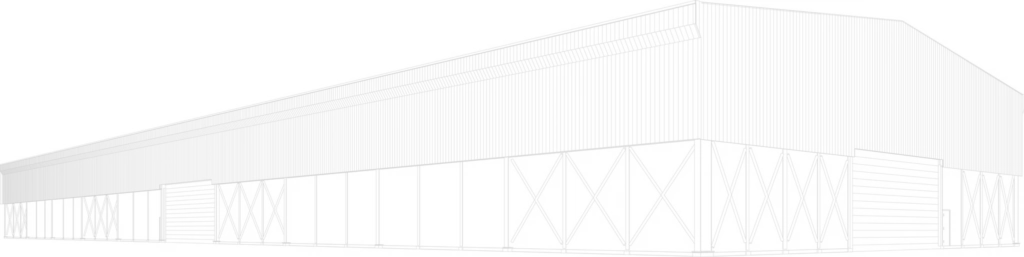
Truss Shed

What is a Truss Shed?

When you need a wide-span, column-free structure but want to avoid the high costs of space frame or plate girder sheds, only one option remains on the table: the truss shed. These lightweight yet durable structures, designed with welded or bolted trusses, not only cover spans ranging from 20 to 100 meters but also offer the most economical and time-efficient solution for large industrial, agricultural, and exhibition projects.

If you’re planning to purchase a truss shed or order one with precise technical specifications, contact the Mammut Structures & panel technical consultation team today to choose the best solution for your project in the shortest time possible.

Request for Consultation

If you would like to receive a free professional consultation, please fill in your information in the form below. Our experts will contact you as soon as possible to provide the specialized services you need.

Technical Features of Truss Sheds

Truss structures, thanks to their engineering design based on triangulation, enable uniform distribution of both gravity and lateral loads through tension and compression members. This engineering system allows for precise control of structural deflection without increasing the size of steel sections. As a result, the dead weight of the structure is reduced and material efficiency is improved.

One of the key advantages of truss sheds is the complete freedom in designing structural members and connections. This flexibility is a significant benefit in projects with wide spans and specialized applications. In cases where plate girder sheds are not economically or technically viable, truss sheds serve as a highly efficient alternative.

Truss sheds are one of the shed types offered by Mammut and can be ordered after consultation with our sales experts.

Technical Description
Feature
Span Range
12 to 80 feet (3.6 to 24 meters) without internal columns
Side Wall Height
8 to 30 feet (2.4 to 9 meters), depending on intended use
Steel Type
Galvanized or hot-rolled steel according to ASTM A653-19a or EN 10346
Design Standards
AISC 360-22, ASCE 7-16 for load calculation, AWS D1.1 for welding
Connection Type
Galvanized or hot-rolled steel according to ASTM A653-19a or EN 10346
Truss System
AISC 360-22, ASCE 7-16 for load calculation, AWS D1.1 for welding
Protective Coating
Epoxy paint, zinc-based anti-corrosion, or hot-dip galvanizing for corrosive environments
Roof & Wall Cladding
Galvanized steel sheets with rock wool or polyurethane insulation
Customization Options
Ability to add openings, mezzanines, truss corridors, and other components based on project requirements

If your project requires wide spans, optimized weight, and precise structural performance, we recommend proceeding with a truss shed order.


Types of Truss Sheds

Like other types of steel structures, truss sheds (Truss Structures) come in various forms, selected based on usage type, span width, installation location, and loading conditions. Understanding these variations is essential for making an informed decision when purchasing a truss shed. Truss sheds are classified based on form, connection type, and the type of force applied into the following categories:

  • Simple Truss: The most common type for small to medium industrial structures. Built from triangular members with pin connections, offering strong resistance to vertical loads.
  • Fink Truss: Suitable for wider spans, especially in sports halls and heavy-duty warehouses. Features multi-layered triangular patterns for better force distribution.
  • North Light Truss: Designed for spaces requiring abundant natural light, such as factories. One side of the truss has a wider angle to accommodate skylight installation.
  • Pratt Truss: Vertical members are under compression and diagonal members under tension. Performs well for large spans and concentrated loads.
  • Howe Truss: Opposite of Pratt; vertical members are in tension, and diagonals are in compression. A suitable choice for sheds with asymmetrical load distribution.
  • Parallel Chord Truss: Both the top and bottom chords are parallel. Ideal for flat-roof wide-span sheds, commonly used in production or distribution halls.

Each type of truss shed can be customized by varying material (galvanized steel, ST52 steel, or alloy steel), roof covering (sandwich panels, galvanized sheets, or polycarbonate), and connection method (welding, bolting, or riveting) to suit specific project needs.

Types of Trusses

  • Triangular Truss (Simple Truss):A structure composed of triangles that evenly distributes loads. This type of truss is suitable for small projects and lightweight roofs.
  • Pratt Truss:Features vertical members in compression and diagonal members in tension. This design is ideal for bridges and industrial buildings with variable loads.
  • Warren Truss:Composed of repeating triangular units that distribute loads evenly. Commonly used in large structures and long-span bridges.
  • K Truss:Designed in a K-shape and offers high structural strength. Suitable for high-rise buildings and heavy-load industrial structures.
  • Fink Truss:An economical and material-efficient design, ideal for medium spans. Frequently used in residential roofs and small sheds.
  • Howe Truss:Diagonal members are in compression, and verticals are in tension, optimizing load distribution. Used in pedestrian bridges and industrial buildings.
  • Polonceau Truss:Utilizes both large and small triangles for uniform load distribution. Suitable for warehouse roofs and large-scale structures.

Components of a Truss Shed

  • Beams and Columns:Beams and columns are the main structural elements of a truss shed, responsible for bearing vertical and horizontal loads. These members are typically made of steel or aluminum, offering high strength and low weight.
  • Trusses:Truss members consist of triangular-shaped components connected in a lattice arrangement. They help distribute loads efficiently and enhance the overall strength of the structure.
  • Foundations:Foundations are the lower parts of the structure responsible for transferring loads to the ground. They are usually made of reinforced concrete to provide the required resistance against applied forces.
  • Roof and Wall Cladding:Roof and wall coverings play a vital role in protecting the structure from weather conditions and creating a suitable interior space. These claddings are commonly made of steel sheets, polycarbonate panels, or sandwich panels.

Advantages of Truss Sheds

  • High Strength and Stability: One of the main advantages of truss sheds is their excellent structural strength and stability. The truss design ensures uniform load distribution, which enhances the shed’s resistance to various forces.
  • Reduced Material Consumption: The unique geometry of trusses helps reduce the overall weight of the structure, leading to lower material usage. This contributes to reduced construction costs and shorter build times.
  • Design Flexibility: Thanks to their modular structure, truss sheds offer great flexibility in design. This allows engineers and architects to create structures of various shapes and sizes tailored to the specific requirements of each project.
  • Fast Construction and Installation: Due to the prefabricated nature of the components and the use of modern installation techniques, truss sheds can be built and installed rapidly. This helps shorten project timelines and reduce associated costs.
  • Lower Cost:Truss sheds generally cost less than other shed types, owing to their reduced material usage and faster construction. This is particularly beneficial for large-scale industrial projects with limited budgets.

Advantages of Consulting with Mammut Experts Ask ChatGPT

Receive Specialized and Precise Solutions
Time and Cost Savings
Reducing Decision-Making Risks
Personalized Solutions Offering
Continuous Support and Partnership
Access to Professional Networks
Staying Up-to-Date with Industry Developments
Enhancing Decision-Making Quality

Applications of Truss Sheds

  • Warehouses and Storage Facilities:Truss sheds are highly suitable for warehouses and storage centers due to their spacious interiors and high structural strength. These structures can efficiently store and manage various goods and materials.
  • Workshops and Factories: Thanks to their durability and large internal space, truss sheds are ideal for establishing industrial workshops and factories. They can effectively accommodate and support heavy machinery and equipment.
  • Sports and Cultural Halls: The unique design and open interior of truss sheds make them suitable for sports and cultural halls. These structures can serve as multi-purpose venues for hosting various events and activities.
  • Exhibitions and Display Areas: With their flexible design capabilities and expansive interior space, truss sheds are an excellent choice for exhibition and conference spaces. They can be quickly produced, installed, and used for hosting trade shows, exhibitions, and public events.

Frequently Asked Questions

What is a Truss Shed and What Are Its Applications? 

A truss shed is a lightweight yet durable structure designed using truss systems, suitable for industrial, sports, exhibition, and warehousing applications. 

What Are the Advantages of Truss Sheds Compared to Other Types?

Truss sheds, by utilizing a truss structure for weight distribution and enhanced strength, are lighter in weight, more resistant to earthquakes, and capable of spanning large widths without internal columns. Overall, they are cost-effective and ideal for large-scale projects.

Is It Possible to Install an Overhead Crane in a Truss Shed?

Yes, the design of a truss shed can accommodate and support the installation of an overhead crane.

 
Is a Truss Shed Suitable for Areas with Harsh Weather Conditions?

Yes, truss sheds are designed to withstand wind, snow, and rain. Mammut’s truss sheds, built with weather-resistant materials, are suitable for both cold and hot climates.

How Long Does It Take to Install a Truss Shed?

The installation time for truss sheds is generally shorter than other types and depends on the structure’s dimensions.

What Is It Used For?

Truss sheds are highly suitable for warehouses, workshops, exhibition halls, and industrial activities that require large, column-free interior spaces.

How Is It Different from Competing or Similar Products?

With its triangular design, a truss shed has a lighter weight and can bear heavier loads. Material usage is also more optimized in this structure.

How Can It Be Obtained and How Long Does It Take?

Various suppliers offer these sheds in different sizes and configurations. The construction and installation process typically takes 3 to 5 weeks.

What Are the Installation and Maintenance Requirements?
 
 
Our experts are available around the clock to promptly respond to your inquiries.